



Por Ariel Ferrero / SunnyNews & FMGN
Mientras cafeterías, restaurantes y tiendas idénticas avanzan sobre la ciudad, algunos rincones de la Gran Manzana todavía conservan su identidad, sus comercios familiares y el espíritu que hizo famosa a Nueva York.
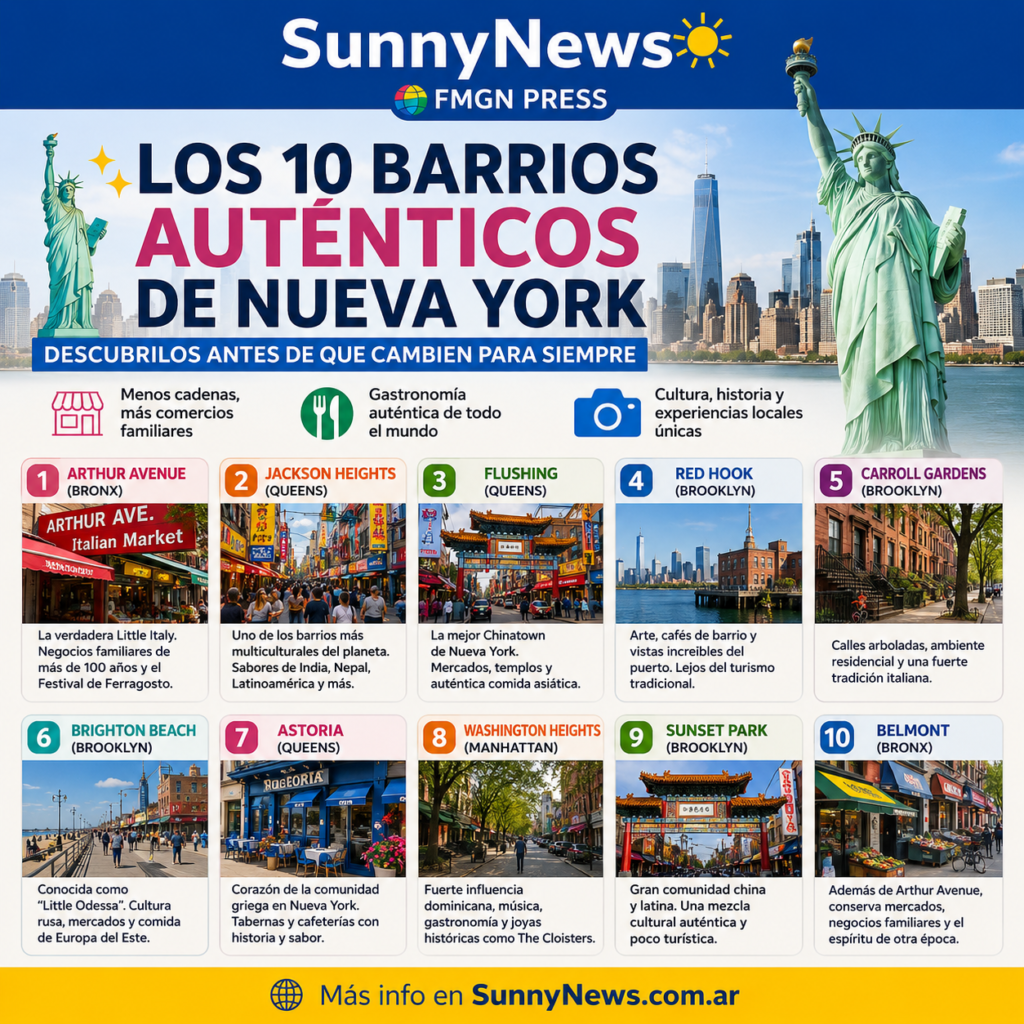
NUEVA YORK – Durante décadas, Nueva York fue una ciudad donde cada barrio tenía una personalidad propia. Bastaba recorrer unas pocas estaciones de metro para cambiar de idioma, de gastronomía, de arquitectura y hasta de ritmo de vida. Sin embargo, esa identidad comienza a diluirse.
Urbanistas y especialistas describen el fenómeno como “same-ification”, un proceso de homogeneización impulsado por la expansión de cadenas comerciales, cafeterías de diseño, restaurantes de moda y tiendas prácticamente idénticas que hacen que barrios históricamente diferentes se parezcan cada vez más entre sí.
La transformación alcanza especialmente a zonas de Brooklyn, Queens e incluso el Bronx, donde la gentrificación también elevó los precios y desplazó muchos comercios tradicionales.
Aun así, todavía quedan rincones donde es posible descubrir la Nueva York más auténtica.
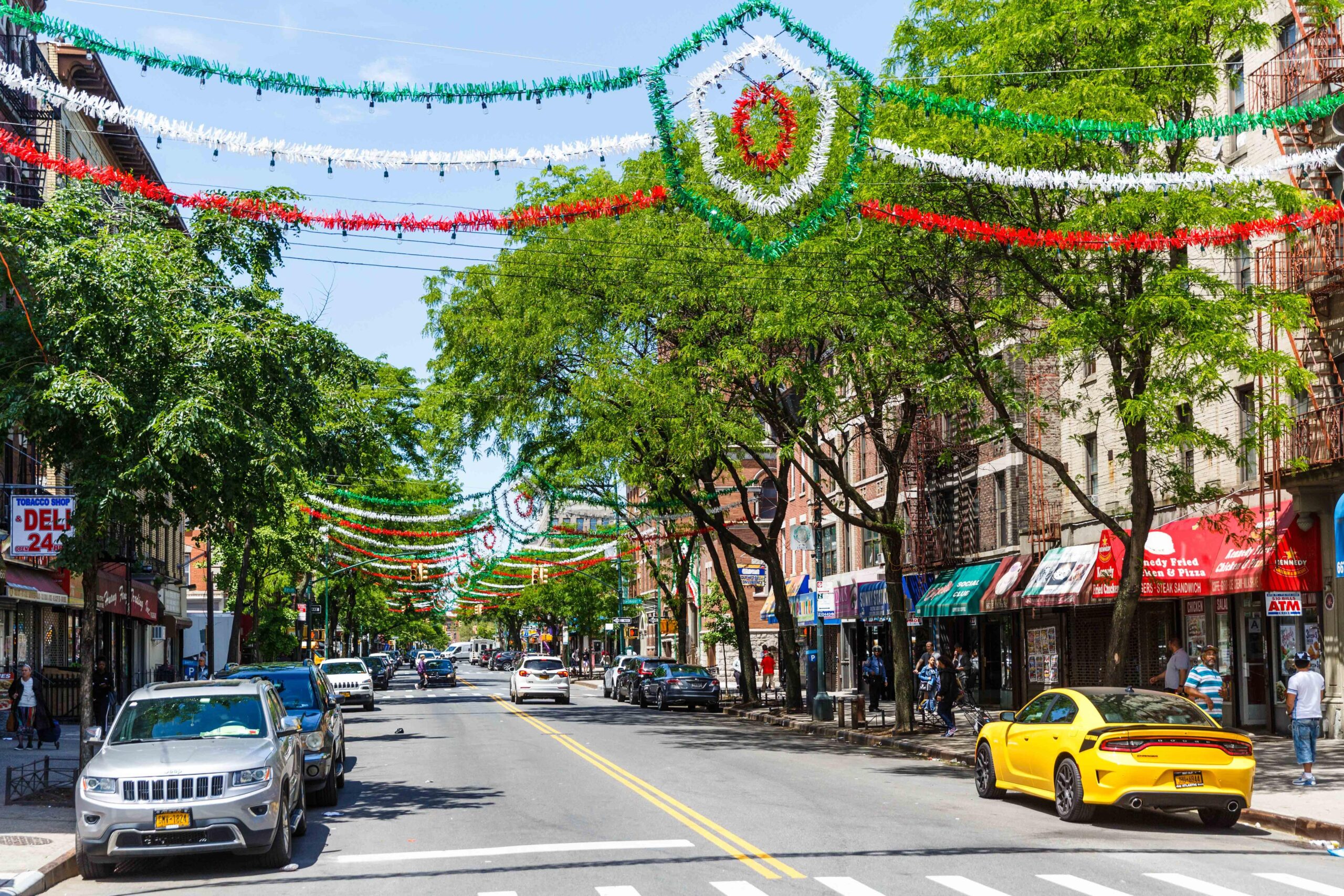
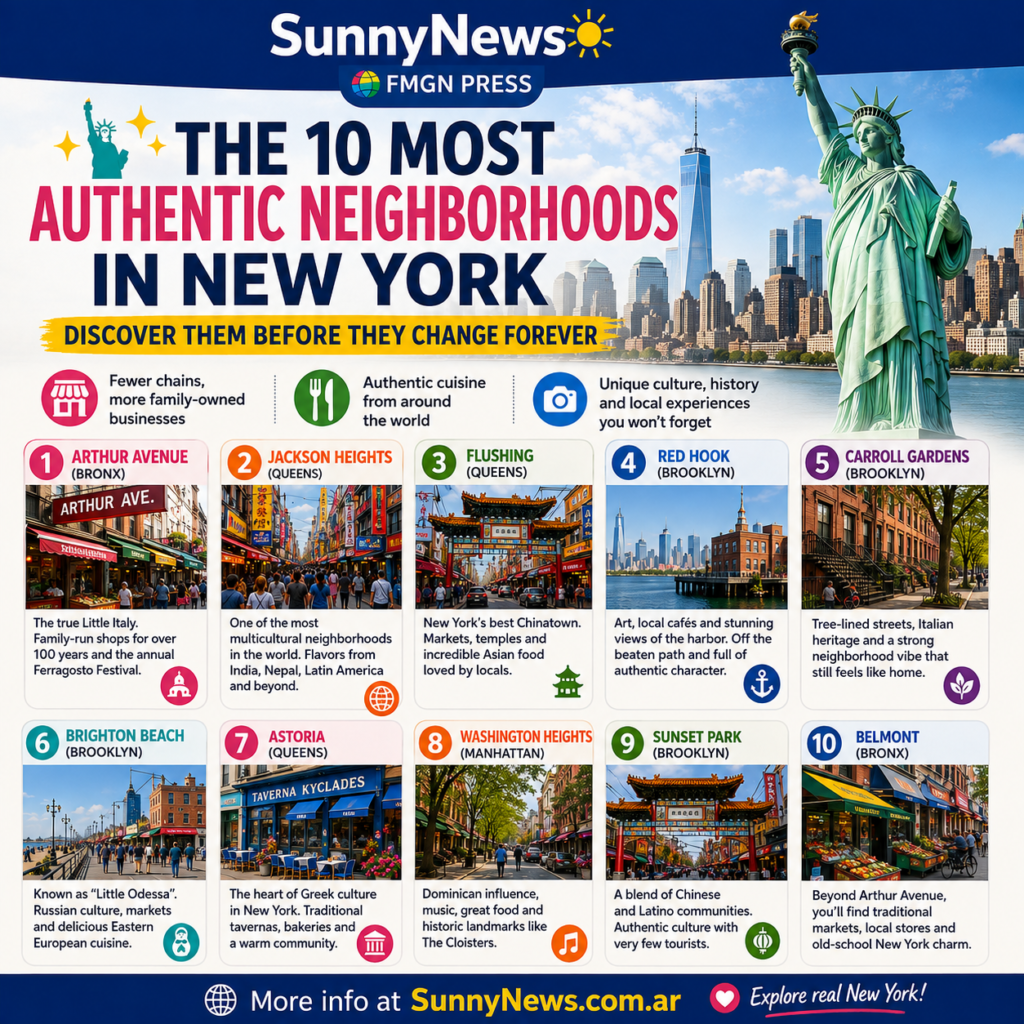
1. Arthur Avenue (Bronx)
Considerada por muchos como la verdadera Little Italy, conserva panaderías, cafés, carnicerías y almacenes administrados por las mismas familias desde hace más de un siglo.
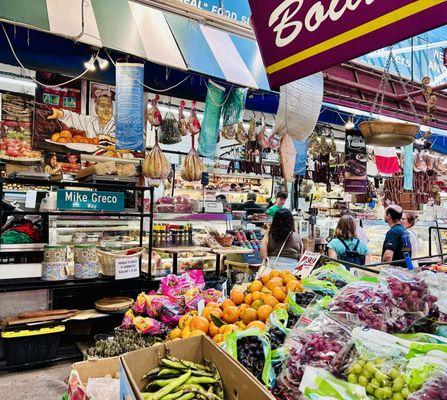
Imperdibles:
- Cerini Coffee
- Madonia Brothers Bakery
- Teitel Brothers
- Artuso Pastry
Además, cada septiembre celebra el tradicional Festival de Ferragosto.
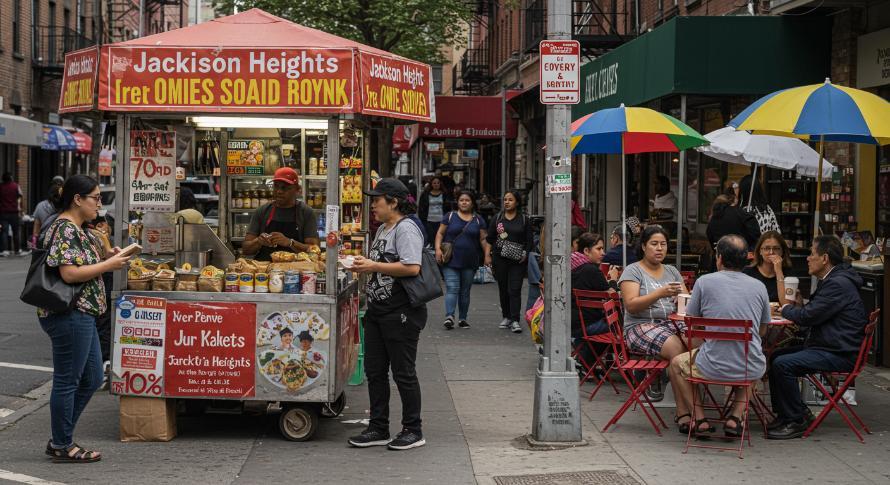
2. Jackson Heights (Queens)
Uno de los barrios más multiculturales del planeta.
Aquí conviven comunidades de India, Nepal, Colombia, Ecuador, México, Bangladesh y Tíbet, ofreciendo una de las mejores experiencias gastronómicas de Nueva York.
3. Flushing (Queens)
Para muchos viajeros, la mejor Chinatown de Nueva York.
Mercados asiáticos, templos, casas de té y restaurantes donde predominan los clientes locales antes que los turistas.
4. Red Hook (Brooklyn)
Lejos del circuito turístico tradicional.
Galpones portuarios reciclados, arte independiente, cafeterías de barrio y una de las mejores vistas del puerto de Nueva York.
5. Carroll Gardens (Brooklyn)
Calles arboladas, casas de ladrillo, trattorias familiares y un fuerte legado italiano.
Mantiene un ambiente residencial difícil de encontrar en otras zonas de Brooklyn.
6. Brighton Beach (Brooklyn)
Conocida como “Little Odessa”.
Aquí predominan los carteles en ruso, mercados de Europa del Este y restaurantes especializados en cocina ucraniana, georgiana y rusa.
7. Astoria (Queens)
Aunque comenzó a sentir el impacto de la homogeneización, sigue siendo uno de los mejores lugares para descubrir la tradición griega de Nueva York.
Sus tabernas y cafeterías todavía conservan parte del espíritu del barrio.
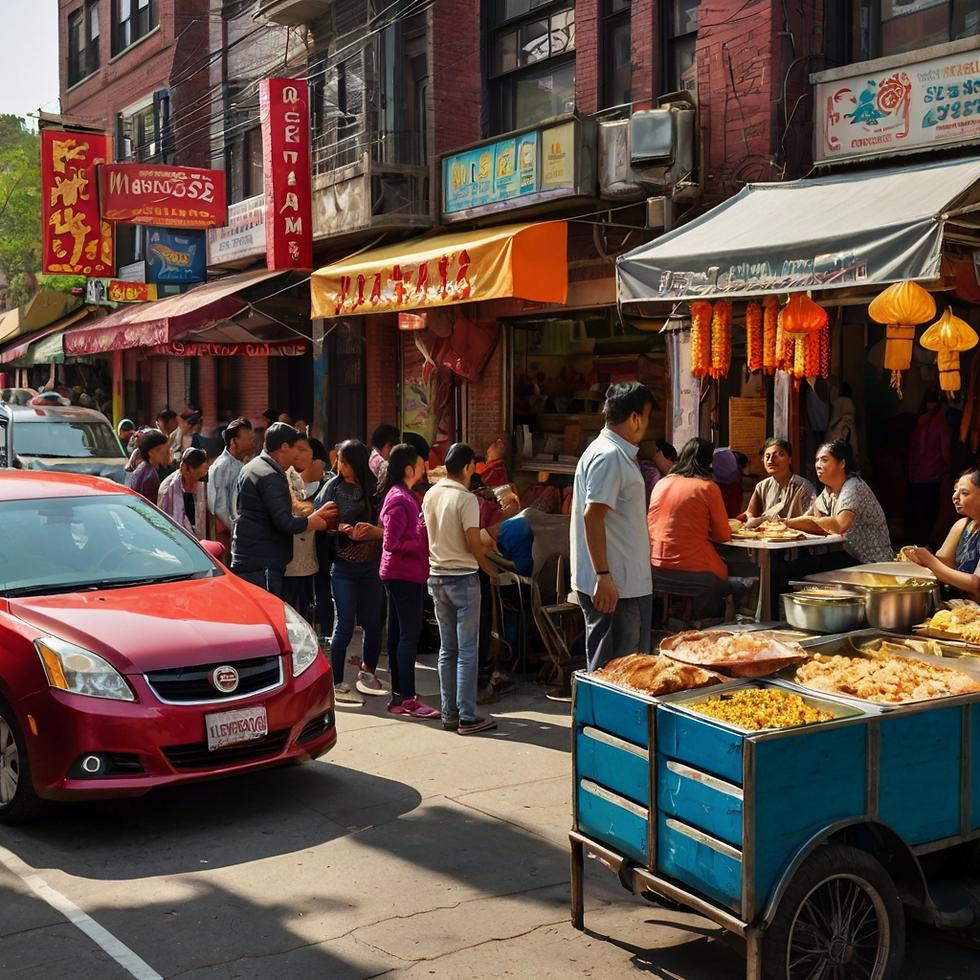
8. Washington Heights (Manhattan)
La fuerte influencia dominicana convierte al barrio en uno de los más vibrantes de Manhattan.
Música, gastronomía y vida de barrio conviven con joyas históricas como The Cloisters.
9. Sunset Park (Brooklyn)
Uno de los secretos mejor guardados.
Tiene una enorme comunidad china junto a otra latinoamericana, ofreciendo una mezcla cultural única.
10. Belmont (Bronx)
Además de Arthur Avenue, el resto del barrio conserva negocios familiares, mercados tradicionales y un ambiente que recuerda a la Nueva York de décadas atrás.
La ciudad cambia… pero todavía hay tiempo
Nueva York sigue siendo una de las ciudades más fascinantes del mundo, pero muchos viajeros frecuentes coinciden en que parte de su encanto residía en las enormes diferencias entre sus barrios.
La expansión de grandes cadenas comerciales y cafeterías prácticamente idénticas está transformando ese paisaje urbano. Sin embargo, quienes se animen a salir del circuito clásico de Times Square, la Quinta Avenida o Central Park todavía encontrarán barrios donde sobreviven las historias familiares, los mercados tradicionales y los sabores que hicieron de la Gran Manzana una de las ciudades más diversas del planeta.
ENGLISH VERSION
The 10 Authentic New York Neighborhoods You Should Visit Before They Change Forever
By Ariel Ferrero
While chain stores and trendy cafés continue to spread across the city, these neighborhoods still preserve the character, family-owned businesses and local culture that made New York one of the world’s most fascinating destinations.
NEW YORK – For decades, New York City was defined by the unique personality of each of its neighborhoods. Just a few subway stops could take visitors into a completely different world, with new languages, cuisines, architecture and traditions. Today, however, many of those distinctions are beginning to fade.
Urban planners and local observers describe the phenomenon as “same-ification” — the growing uniformity caused by the rapid expansion of chain stores, trendy cafés and nearly identical retail concepts that make neighborhoods once known for their individuality look increasingly alike.
The trend has become especially noticeable in parts of Brooklyn, Queens and even the Bronx, where gentrification has also pushed out many long-established family businesses.
Fortunately, there are still places where travelers can experience the authentic spirit of New York.
1. Arthur Avenue (Bronx)
Often called the city’s real Little Italy, Arthur Avenue remains home to family-owned bakeries, butcher shops, cafés and specialty food stores that have served generations of New Yorkers for more than a century.
Don’t miss:
- Cerini Coffee & Gifts
- Madonia Brothers Bakery
- Teitel Brothers
- Artuso Pastry
Every September, the neighborhood also celebrates its famous Ferragosto Festival, one of New York’s best Italian street festivals.
2. Jackson Heights (Queens)
One of the most multicultural neighborhoods on the planet.
Visitors can experience authentic cuisine from India, Nepal, Colombia, Ecuador, Mexico, Bangladesh, Tibet and many other countries—all within a few blocks.
3. Flushing (Queens)
For many locals, this is New York’s best Chinatown.
Bustling food markets, temples, tea houses and outstanding restaurants make Flushing an unforgettable destination for food lovers.
4. Red Hook (Brooklyn)
Far from the traditional tourist circuit.
Former warehouses, independent art galleries, neighborhood cafés and spectacular harbor views give Red Hook a distinctive character unlike anywhere else in the city.
5. Carroll Gardens (Brooklyn)
Tree-lined streets, brownstone homes, family-run Italian restaurants and a relaxed residential atmosphere make this one of Brooklyn’s most charming neighborhoods.
6. Brighton Beach (Brooklyn)
Known as “Little Odessa,” this waterfront neighborhood showcases the culture of Eastern Europe through its markets, restaurants and Russian-speaking community.
7. Astoria (Queens)
Although development has changed parts of the neighborhood, Astoria remains the heart of New York’s Greek community.
Traditional tavernas, bakeries and cafés continue to preserve much of its original character.
8. Washington Heights (Manhattan)
Rich Dominican culture, vibrant music, outstanding Latin American cuisine and historic landmarks such as The Cloistersmake Washington Heights one of Manhattan’s most authentic neighborhoods.
9. Sunset Park (Brooklyn)
A hidden gem where Chinese and Latino communities live side by side.
The neighborhood offers incredible food, local markets and a genuine multicultural atmosphere that remains largely untouched by mass tourism.
10. Belmont (Bronx)
Beyond Arthur Avenue, Belmont still preserves neighborhood markets, family-owned businesses and an old-school New York atmosphere that has disappeared from many other parts of the city.
New York Is Changing—But There’s Still Time
New York remains one of the world’s greatest cities, but many longtime visitors agree that much of its magic came from the striking differences between its neighborhoods.
As chain stores, trendy cafés and standardized retail concepts continue to reshape the city, discovering these authentic communities has become more rewarding than ever.
For travelers willing to venture beyond Times Square, Fifth Avenue and Central Park, these neighborhoods offer something increasingly rare: genuine local culture, family traditions, unforgettable food and the true soul of New York City.








Dejá una respuesta